
The *Monogatari* Series has one of anime’s most intimidating watch orders — but the solution is simpler than the timeline itself.
For a first watch, **do not try to put every event into chronological order**. The series is intentionally told out of sequence, with revelations, changes in narrator and missing pieces forming part of how the story works.
If you are starting *Monogatari* for the first time, this is the order we recommend:
- **Bakemonogatari**
- **Kizumonogatari** — Part I: *Tekketsu*, Part II: *Nekketsu*, Part III: *Reiketsu*
- **Nisemonogatari**
- **Nekomonogatari (Black)**
- **Monogatari Series: Second Season**
- **Hanamonogatari**
- **Tsukimonogatari**
- **Owarimonogatari**
- **Koyomimonogatari**
- **Owarimonogatari Second Season**
- **Zoku Owarimonogatari**
- **Monogatari Series: Off & Monster Season**
- **Wazamonogatari: Karen Ogre** — after release
That order keeps the anime easy to follow while preserving most of the narrative structure viewers encountered as the adaptations were released.
The recommended Monogatari watch order explained
1. Bakemonogatari

Start with *Bakemonogatari*.
This is the real introduction to Koyomi Araragi, Hitagi Senjougahara, Tsubasa Hanekawa, Mayoi Hachikuji, Suruga Kanbaru, Nadeko Sengoku and the strange supernatural problems that connect them.
Even though earlier events exist in the timeline, *Bakemonogatari* was designed as the audience’s entry point.
One detail is worth checking before moving on: **Bakemonogatari has 15 episodes**, ending with “Tsubasa Cat, Part Five.” The official Japanese Blu-ray box includes all 15 episodes.
2. Kizumonogatari

Next, go back to the beginning of Araragi’s supernatural story with *Kizumonogatari*.
The original anime adaptation was released as three films:
- *Kizumonogatari Part I: Tekketsu*
- *Kizumonogatari Part II: Nekketsu*
- *Kizumonogatari Part III: Reiketsu*
These films explain Araragi’s encounter with Kiss-Shot Acerola-Orion Heart-Under-Blade and establish the events that shaped his condition before *Bakemonogatari*.
There is also **Kizumonogatari: Koyomi Vamp**, released theatrically in Japan in 2024. It is not another sequel. It is a newly re-edited compilation of the original three *Kizumonogatari* films, presented as one 144-minute feature.
For a first watch, we recommend the original trilogy. If you want a shorter alternative or are revisiting the series, *Koyomi Vamp* can replace the three films rather than being watched after them.
3. Nisemonogatari
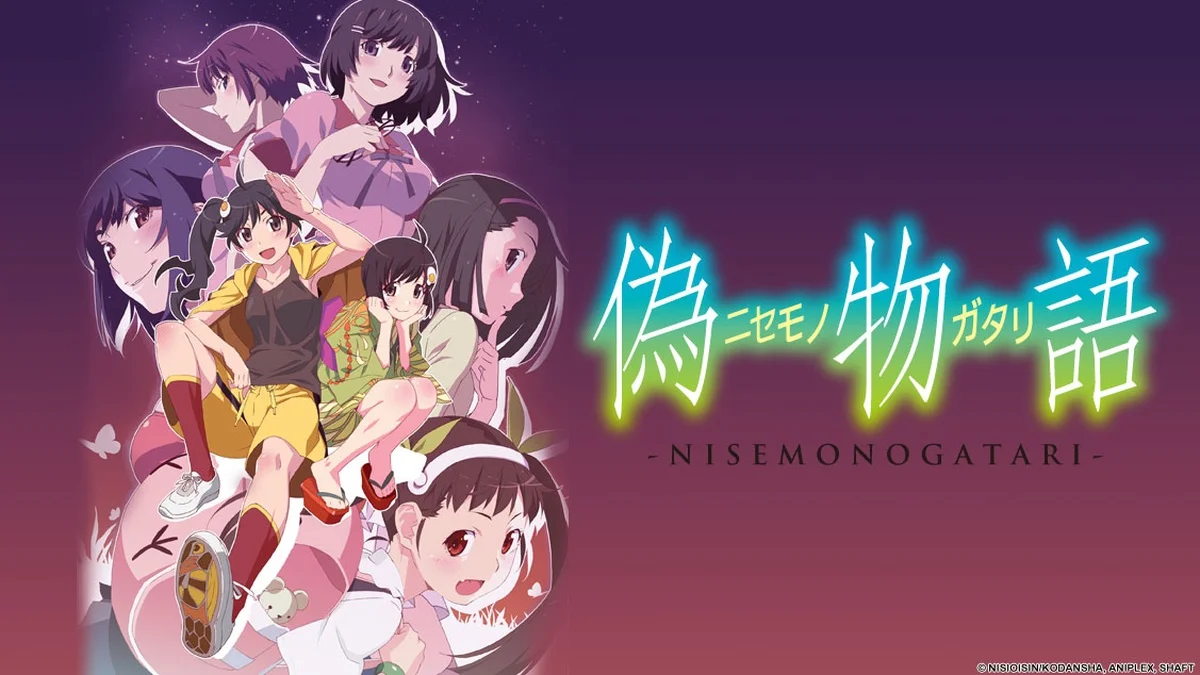
Return to the main story with *Nisemonogatari*.
The focus expands toward Araragi’s sisters Karen and Tsukihi while developing several characters and supernatural rules introduced earlier.
Do not skip it. Some moments may initially feel more self-contained than the major arcs of *Bakemonogatari*, but later seasons build directly on relationships and concepts established here.
4. Nekomonogatari (Black)
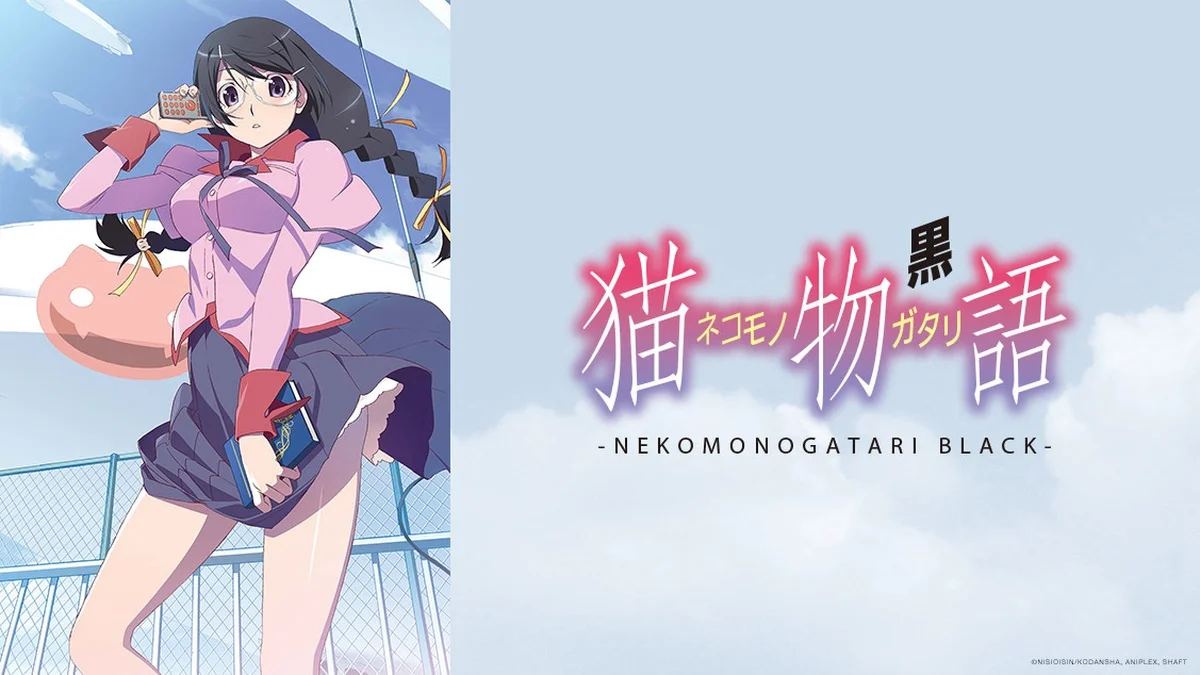
*Nekomonogatari (Black)* is another prequel, this time focusing on Tsubasa Hanekawa and events from Golden Week before *Bakemonogatari*.
By this point, however, you already have the context necessary to understand why those events matter.
This is another example of why chronological order is not automatically the best first-time order: information about the past often becomes more meaningful after you already know the characters in the present.
5. Monogatari Series: Second Season

This is where *Monogatari* becomes even more structurally ambitious.
*Monogatari Series: Second Season* contains several major arcs, including:
- *Nekomonogatari (White)*
- *Kabukimonogatari*
- *Otorimonogatari*
- *Onimonogatari*
- *Koimonogatari*
The original Second Season source-material grouping also includes *Hanamonogatari*. The official franchise material describes Second Season as six works: *Nekomonogatari (White)*, *Kabukimonogatari*, *Hanamonogatari*, *Otorimonogatari*, *Onimonogatari* and *Koimonogatari*.
The anime release schedule made that structure slightly less obvious, which leads to the next entry.
6. Hanamonogatari

Watch *Hanamonogatari* after *Monogatari Series: Second Season* if you want the simplest anime-based order.
Its story focuses primarily on Suruga Kanbaru and takes place later in the internal timeline than much of the material surrounding it.
Readers following the original novel order more closely may instead place *Hanamonogatari* **inside Second Season, after Kabukimonogatari and before Otorimonogatari**.
Both approaches work. For a first anime watch, keeping *Second Season* together and then watching *Hanamonogatari* is considerably easier.
7. Tsukimonogatari
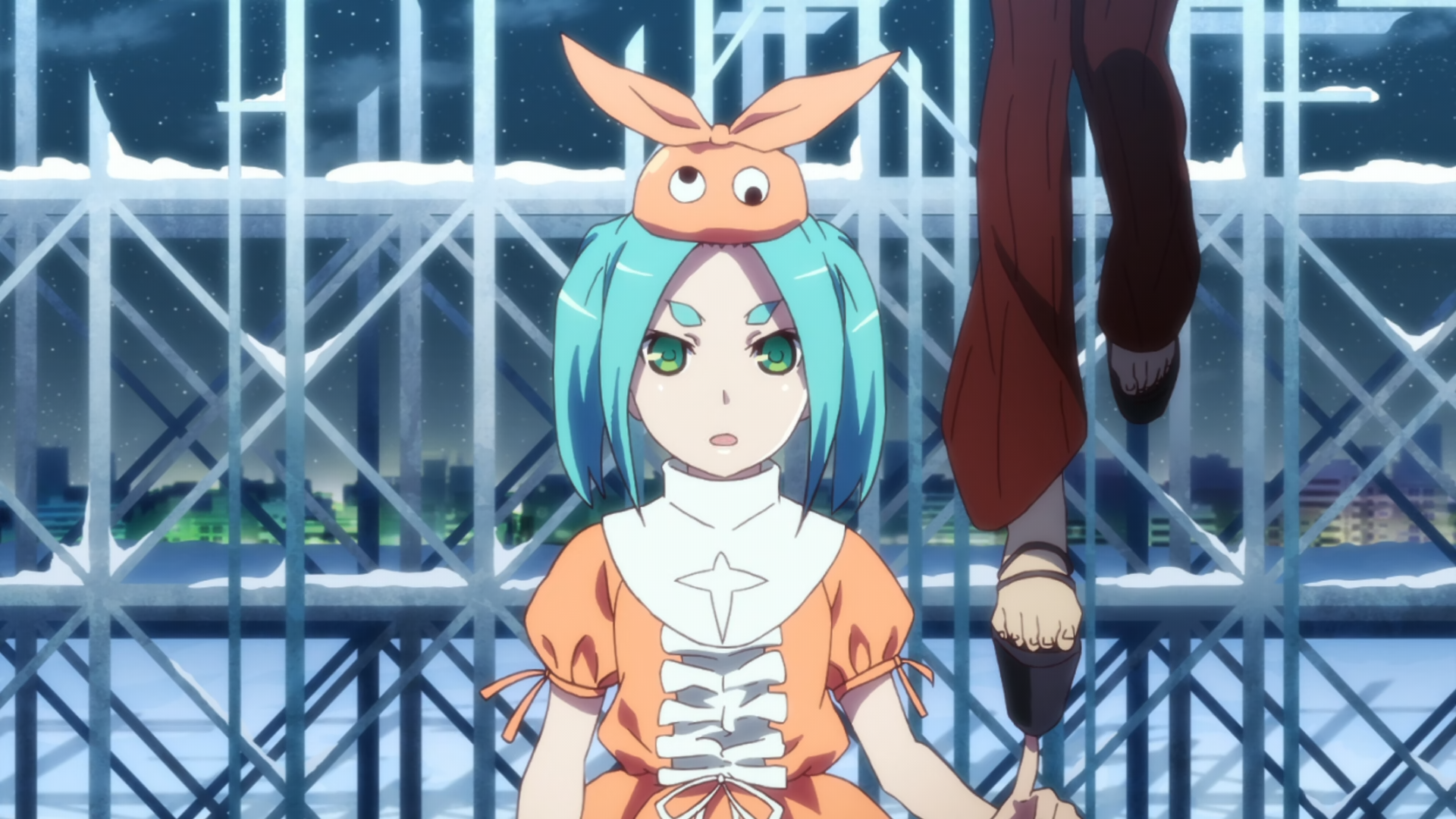
With *Tsukimonogatari*, the series enters what is commonly grouped as its Final Season material.
Araragi begins facing the consequences of repeatedly relying on his supernatural abilities, and several long-running threads start moving toward resolution.
At this stage, skipping installments becomes increasingly risky because the final parts of the original Araragi-centered story are much more interconnected.
8. Owarimonogatari
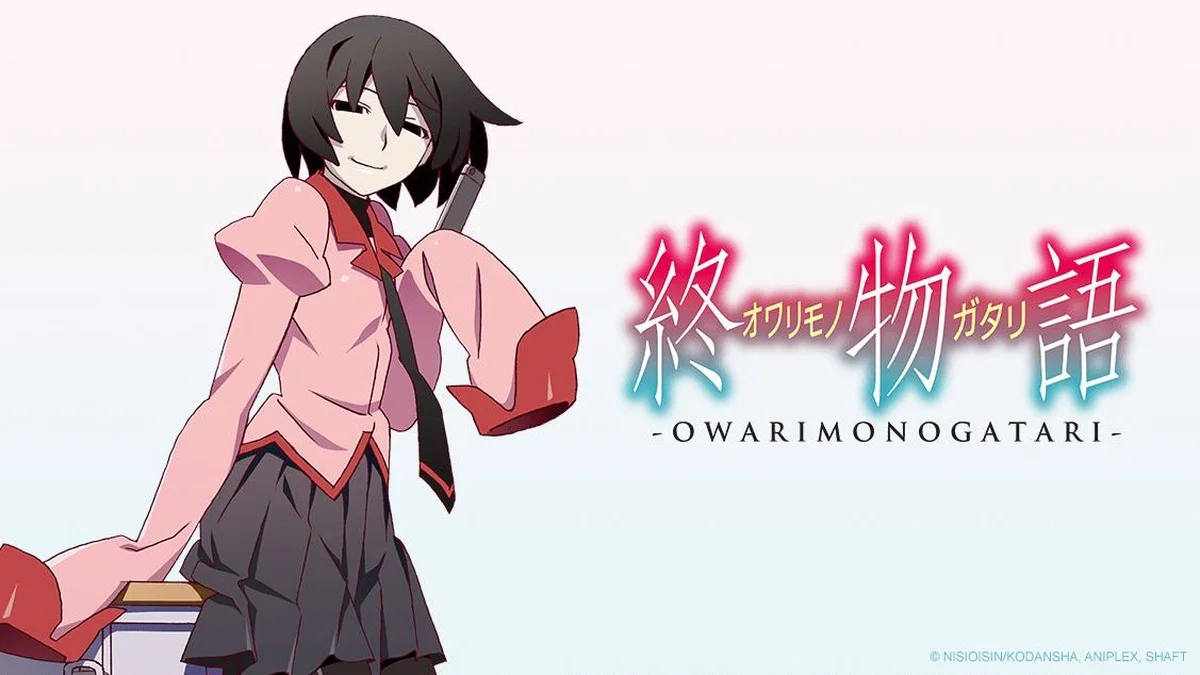
Watch the first *Owarimonogatari* adaptation next.
This part explores both Araragi’s past and unresolved events surrounding characters such as Ougi Oshino and Sodachi Oikura, while also filling important gaps in the wider timeline.
Do not confuse this with **Owarimonogatari Second Season**, which comes later.
9. Koyomimonogatari

*Koyomimonogatari* consists of 12 shorter stories spread across roughly a year of Araragi’s life. The official description explicitly presents them as small episodes occurring between stories already told elsewhere in the series.
That may make it sound optional.
It is not.
The later episodes become directly relevant to the ending of the Final Season storyline, so watch all of *Koyomimonogatari* before continuing to *Owarimonogatari Second Season*.
If you are following the **light novel publication order** rather than the anime-oriented order used in this guide, *Koyomimonogatari* can instead be placed before the first *Owarimonogatari*.
10. Owarimonogatari Second Season

Now continue with *Owarimonogatari Second Season*.
This portion contains the concluding arcs of Araragi’s high-school story and resolves several mysteries that have been built across earlier entries.
Watching *Koyomimonogatari* first is especially important here.
11. Zoku Owarimonogatari

Despite the word “Owari” — “end” — appearing once again, there is still one more chapter.
*Zoku Owarimonogatari* follows the conclusion of *Owarimonogatari* and functions as an epilogue to this stage of Araragi’s life.
Its six-episode television version followed an earlier theatrical presentation in Japan.
For viewers only interested in the original high-school-era storyline, this is a natural stopping point.
But *Monogatari* did not actually stop.
12. Monogatari Series: Off & Monster Season

After *Zoku Owarimonogatari*, continue with **Monogatari Series: Off & Monster Season**.
The 2024 anime adaptation expands the perspective beyond the ending of Araragi’s high-school story, revisiting characters he helped while also moving into later parts of the franchise.
The released anime contains material from:
- *Orokamonogatari*
- *Nademonogatari*
- *Wazamonogatari*
- *Shinobumonogatari*
The streamed season includes arcs such as “Tsukihi Undo,” “Nadeko Draw,” “Acerola Bon Appétit” and “Shinobu Mustard.”
This material should **not** be used as an entry point simply because it is newer. It assumes substantial familiarity with the characters and their previous development.
13. Wazamonogatari: Karen Ogre

The anime story is continuing.
As of September 2026, the official *Monogatari* website has announced a new *Off & Monster Season* episode adapting **Wazamonogatari: Karen Ogre**, centered on Karen Araragi.
It is scheduled for **winter 2026** and has not yet been added to the completed watch order. Once released, first-time viewers should simply continue to it after the currently available *Off & Monster Season* material.
This guide will need to be updated when the episode is released and when further *Off Season* or *Monster Season* adaptations are announced.
Should you watch Monogatari in chronological order?
Not on your first watch.
The internal chronology is deliberately fragmented. Prequels appear after sequels, different arcs overlap, narrators provide incomplete perspectives, and information revealed later can completely change how an earlier event is understood.
The franchise itself has published an official chronological retrospective. It starts with the events of *Kizumonogatari*, then moves through *Nekomonogatari (Black)*, the *Bakemonogatari* arcs and the many interwoven stories that follow.
That timeline is useful for understanding the series after you already know the story.
For a first watch, however, reorganizing everything chronologically removes part of the mystery that defines *Monogatari*.
Think of chronological order as a **rewatch option**, not an onboarding strategy.
What about the light novel order?
There is another legitimate approach: following the order in which Nisio Isin's original novels presented the story.
This produces a few notable differences from the simpler anime order above.
Most importantly, *Kizumonogatari* remains immediately after *Bakemonogatari*, *Hanamonogatari* is placed within the Second Season sequence, and *Koyomimonogatari* comes before *Owarimonogatari*.
For readers who care strongly about the author's original information flow, that approach makes sense.
For someone who simply wants to start watching the anime without repeatedly stopping in the middle of seasons, the recommended order in this guide is easier to manage.
Can you skip Kizumonogatari?
You can physically continue without it.
You probably should not.
*Kizumonogatari* explains one of the most important relationships in the entire franchise: the bond between Araragi and Shinobu. Later stories increasingly depend on understanding what happened during that spring break.
Watching it immediately after *Bakemonogatari* gives that relationship context before the series develops it further.
Can you skip the recap episodes?
Yes.
When a season includes a true recap episode that only summarizes previously watched material, skipping it will not remove new story content.
Be more careful with short installments such as *Koyomimonogatari*. Short does not mean optional, and some of its later material is essential to the Final Season storyline.
Where can you watch Monogatari?
Streaming availability varies significantly by country and can change over time.
Crunchyroll currently lists multiple entries in the franchise, including *Bakemonogatari*, *Monogatari Series: Second Season*, *Tsukimonogatari*, *Owarimonogatari* and *Monogatari Series: Off & Monster Season* in supported markets. *Off & Monster Season* currently offers subtitles in several languages, including English and Brazilian Portuguese.
Because licensing differs by region, check each title in your local streaming catalog rather than assuming one service carries the entire franchise.
The simple answer
If all the different “-monogatari” titles still look overwhelming, remember the basic route:
**Bakemonogatari → Kizumonogatari → Nisemonogatari → Nekomonogatari (Black) → Monogatari Series: Second Season → Hanamonogatari → Tsukimonogatari → Owarimonogatari → Koyomimonogatari → Owarimonogatari Second Season → Zoku Owarimonogatari → Off & Monster Season.**
You do not need to understand the complete timeline before you begin.
In fact, you are not supposed to.
Part of *Monogatari* is learning how its fragmented stories, unreliable perspectives and apparently disconnected events fit together — one story at a time.